

Book flight, bus, train, or ferry tickets in
Netherlands
- Book online with local operators
- We're here for you 24/7
- Stories by travelers, for travelers


Popular routes
Paris to Amsterdam
Amsterdam to Berlin
Amsterdam to Prague
Amsterdam to Brussels
Amsterdam to Munich
Zurich to Amsterdam
Rotterdam to Berlin
Brussels to Amsterdam
Rotterdam to Paris
Budapest to Eindhoven
Utrecht to Paris
Rotterdam to Lisbon
Netherlands at a glance
International dialing code
Good to know
Spoken language
Cost to avg. transport ticket
Your questions, Our answers
Which holidays are celebrated in Netherlands?
These are the holidays celebrated in Netherlands:
- 2nd Day of Christmas
- Ascension Day
- Christmas
- Easter
- Easter Monday
- Good Friday
- New Year's
- Pentecost
- Whit Monday
Netherlands Travel Guide: Everything You Need to Know
Discover everything you need to know about the Netherlands in our simple travel guide. Learn about the Dutch weather and find out the best months to plan your visit. Our guide explains how to travel around the country easily by train, bus, and bicycle. Explore famous cities like Amsterdam and Rotterdam, plus must-see attractions including colorful tulip fields and historic windmills. Try delicious Dutch treats like stroopwafels and find secret spots that most tourists miss.
Weather and Best Time to Visit
Amsterdam & North Holland: Visit from April to May for tulip fields in full bloom, or September to October for fewer crowds and mild weather. Summer months (June-August) offer warm temperatures but attract more tourists.
Utrecht & Central Netherlands: Spring (April-May) and early fall (September) are ideal with comfortable temperatures and vibrant landscapes. Summer brings pleasant weather with occasional rain showers.
Rotterdam & South Holland: May through September offers the best weather for exploring this modern urban area, with July and August being the warmest but busiest.
Frisian Islands & Northern Coast: June to August provides optimal conditions for beach activities and island hopping, with warmer sea temperatures.
Maastricht & Limburg: Late spring (May-June) and early fall (September) offer pleasant temperatures for exploring the hilly landscapes and historic sites.
Traveling by Season
The High Season: June-August
The Netherlands experiences its busiest tourism period during summer. Amsterdam, the tulip fields, and the coastal areas become crowded. Temperatures typically range from 17-23°C (63-73°F), with long daylight hours and generally good weather, though 7-10 rainy days per month are common.
Accommodation prices increase 30-50% compared to the low season. Popular attractions require advance booking, and public transportation gets crowded. Summer thunderstorms can cause flight delays at Schiphol Airport. Events like Pride Amsterdam and music festivals create additional visitor surges.
The Low Season: November-March
Winter sees fewer tourists except during December holidays. Temperatures typically range between 1-6°C (34-43°F), with short daylight hours and increased rainfall (12-15 rainy days monthly). Occasional snow can disrupt transportation.
Accommodations offer substantial discounts (up to 40%), attractions have shorter hours but minimal queues, and restaurants are easier to access. Coastal areas become very quiet, while Amsterdam maintains a cozy atmosphere. Fog can affect air travel during this period.
The Shoulder Season: March-May & September-October
These periods offer the best balance of value and experience. Spring features tulip blooms (late March-May), while autumn displays colorful foliage. Temperatures range from 7-17°C (45-63°F), with moderate rainfall (9-11 rainy days monthly). Prices are 15-25% lower than during high season, with good availability for accommodations and attractions.
Tourist numbers remain manageable, allowing for more authentic local interactions. Spring might have unexpected cold periods, while autumn occasionally experiences Atlantic storms that can disrupt ferries and trains.
How to Get to Netherlands
Amsterdam Airport Schiphol is the Netherlands' largest airport, handling over 70 million passengers annually. It serves as the main gateway to Amsterdam, Rotterdam, and international destinations. The airport offers observation decks where visitors can watch aircraft operations.
Rotterdam The Hague Airport is located in the western Netherlands, providing convenient access to both Rotterdam and The Hague. The airport is well-connected to The Hague's historic center by train.
Eindhoven Airport in the southern Netherlands is popular for low-cost flights and serves the technology-focused city of Eindhoven.
In the northern region, Groningen Airport Eelde connects travelers to the university city of Groningen.
Maastricht Aachen Airport is positioned near the country's southern borders, offering access to Maastricht as well as nearby regions in Belgium and Germany.
Cross-Border Travel to Netherlands
The Netherlands is well-connected to neighboring European countries, offering several transportation options beyond flying.
By bus from Germany: The Nuremberg to Amsterdam route takes you through western Germany before entering the flat Dutch landscape. These buses provide adequate Wi-Fi (less reliable in rural areas), reclining seats for comfortable naps, and stop at serviceable rest areas along the autobahn.
By train from France: Thalys high-speed trains connect routes like Paris to Amsterdam and Paris to Utrecht with efficient service. The Lyon to Amsterdam and Montpellier to Amsterdam routes offer longer journeys across changing European landscapes. Second-class tickets provide good value, as first-class primarily offers slightly more spacious seating.
By ferry from the United Kingdom: The North Sea crossing connects England directly to the Netherlands with overnight service. Basic cabins suffice for individual travelers, while families should consider larger accommodations. The Newcastle to IJmuiden route offers a good combination of comfort and convenience. Consider bringing your own snacks to avoid the expensive onboard restaurant options.
How to Get Around
The Netherlands connects people through a transportation network that works like clockwork. Trains run by NS (Nederlandse Spoorwegen) link cities across the country, with carriages arriving and departing on schedule throughout the day.
When train tracks end, buses begin, reaching towns and villages nestled between tulip fields and windmills. Ferry boats carry passengers to islands like Texel, where the North Sea breeze greets travelers as they disembark.
Inside cities, the story continues underground with metros in Amsterdam, Rotterdam, and The Hague, while buses and trams weave through streets above.
But the true Dutch tale unfolds on two wheels — bicycles flow through cities like blood through veins, with riders of all ages pedaling past 400-year-old canal houses and modern architecture alike. Renting a bike puts you in this daily story, joining thousands of locals who navigate their lives at pedal-pace.
In Amsterdam and other cities built around water, boats add another chapter to the journey, offering pathways where roads cannot go. Travelers can see centuries of history from water level, passing under stone bridges that have stood since the Golden Age.
For those planning their own Netherlands transportation story, services through NS help connect the dots from arrival to adventure.
Food Scene
When you bite into a freshly made stroopwafel at Amsterdam's Albert Cuyp Market, warm caramel syrup oozes between two thin waffle layers. The vendor hands it to you still hot, steam rising in the cool air.
For bitterballen, those crispy meatballs Dutch people eat with mustard, any wood-paneled brown café will do, locals order them by the plateful alongside cold beers. As for herring, nothing beats watching a street vendor deftly clean one before you eat it the Dutch way, by the tail, looking up at the Amsterdam sky.
In Rotterdam, the Markthal's curved ceiling stretches overhead like a modern cathedral dedicated to food. Stalls line the hall, their owners calling out to passersby.
The Foodhallen in Amsterdam houses food makers in what was once an old tram depot; now, people gather at communal tables, plates in hand, conversation flowing.
In Limburg, bakers still use recipes passed down through generations for their vlaai, a fruit tart with a crust that manages to be both crisp and tender. Gouda isn't just a city but a cheese that locals age for years until it develops tiny crystals that crunch between your teeth. When in Zeeland, try mussels harvested that morning from cold North Sea waters.
Hidden Gems
1. Radio Kootwijk
From the sandy heaths of the Veluwe rises a concrete giant — Radio Kootwijk. This Art Deco building was born in the 1920s to connect the Netherlands with far-off colonies through radio waves. Today, its unusual acoustics carry music and voices during cultural events instead.
The surrounding nature tells its own story through seasons. Paths wind through forests and open land, best experienced from spring through fall. Some visitors drive there, finding a spot in the small parking area. Others prefer pedaling the 9 km (5.5 miles) woodland route from Apeldoorn station, where trees provide shade and birds provide a soundtrack.
2. Biesbosch National Park
Waters rise and fall with the tides in Biesbosch National Park, creating a rare freshwater tidal landscape where rivers split and rejoin around countless islands. Beavers build their homes here, while sea eagles circle overhead. The park reveals itself best from the water, in a silent electric boat or paddle-powered canoe that lets you drift close to wildlife without disturbing them.
Summer covers everything in green, but animals show themselves more often during spring and fall when fewer people visit. The journey begins at the visitor center near Dordrecht, reachable by regular buses from the train station.
3. Hortus Botanicus Hare
Plants from around the world tell their stories in Hortus Botanicus Haren near Groningen. Chinese pavilions stand among carefully arranged rocks and water features. Nearby, Celtic wisdom speaks through a labyrinth of trees where walking becomes thinking. Step into greenhouses and the air changes, suddenly thick with tropical moisture and alive with unfamiliar scents.
Late spring fills the gardens with color and life, while autumn paints everything in warm oranges and reds. Just 10 km (6.2 miles) south of Groningen, bus 51 stops at the entrance, though many choose to cycle there, following quiet country roads past farms and fields.
Scenic Routes
The Netherlands holds stories within its landscapes. Fields painted with flowers, windmills that have stood for centuries, and villages where time moves differently. Here are five journeys that reveal different chapters of this small but varied country:
-
Amsterdam to Giethoorn: The bus windows frame a changing story as city buildings give way to open farmland. At journey's end waits Giethoorn, where canals replace streets and boats replace cars. Houses with thatched roofs sit on tiny islands connected by over 180 small bridges. Summer brings the full picture — green banks reflecting in clear water, boats gliding silently past homes.
-
Haarlem to Bloemendaal aan Zee: Pedaling from Haarlem, the path winds through sand dunes that rise and fall like gentle waves. Pine trees cast shadows across the trail. After a rewarding ride, the North Sea appears, stretching to the horizon. In spring, purple and yellow flowers dot the dunes, marking the trail with color.
-
Rotterdam to Kinderdijk: Water carries travelers from modern Rotterdam to a place where 19 windmills from the 1700s still stand tall. These giants once kept the surrounding land dry. In early morning or late afternoon light, their silhouettes and reflections create scenes photographers dream about. The boat provides the view that Dutch painters sought centuries ago.
-
Den Helder to Texel: The ferry crossing takes just 20 minutes, but it's a journey between worlds. Texel greets visitors with beaches that stretch for miles, forests that shelter deer, and fields where sheep graze. The island changes with seasons — spring brings thousands of birds returning from migration. The salt air and gentle rocking of the ferry set the mood for island exploration.
-
Hoorn to Medemblik: The whistle blows, steam rises, and the old train begins its journey. Outside the windows, North Holland unfolds — small farms, canals lined with reeds, church spires marking distant villages. The train itself, with wooden seats and brass fittings, tells stories of journeys past. Summer brings yellow fields of rapeseed and green pastures dotted with black-and-white cows.
Events, Festivals and Local Markets
Dance through streets filled with Caribbean rhythms at the Rotterdam Summer Carnival each July. Steel drums echo between buildings as parade participants in handmade costumes wind through Rotterdam's neighborhoods, bringing people from all backgrounds together.
The notes of saxophones and trumpets fill the air during the North Sea Jazz Festival in Rotterdam. Musicians who've shaped jazz history perform alongside emerging talents, creating summer evenings where conversations flow easily between strangers united by music.
Curious minds wander through factories-turned-galleries during Dutch Design Week in Eindhoven each October. Students show projects next to established designers, turning everyday objects into conversation pieces that make you question how things could work differently.
Winter darkness disappears during GLOW Eindhoven in November. Light installations tell stories across Eindhoven's buildings and parks, turning evening walks into adventures where each corner reveals new colors painting the night.
Best Places to Visit
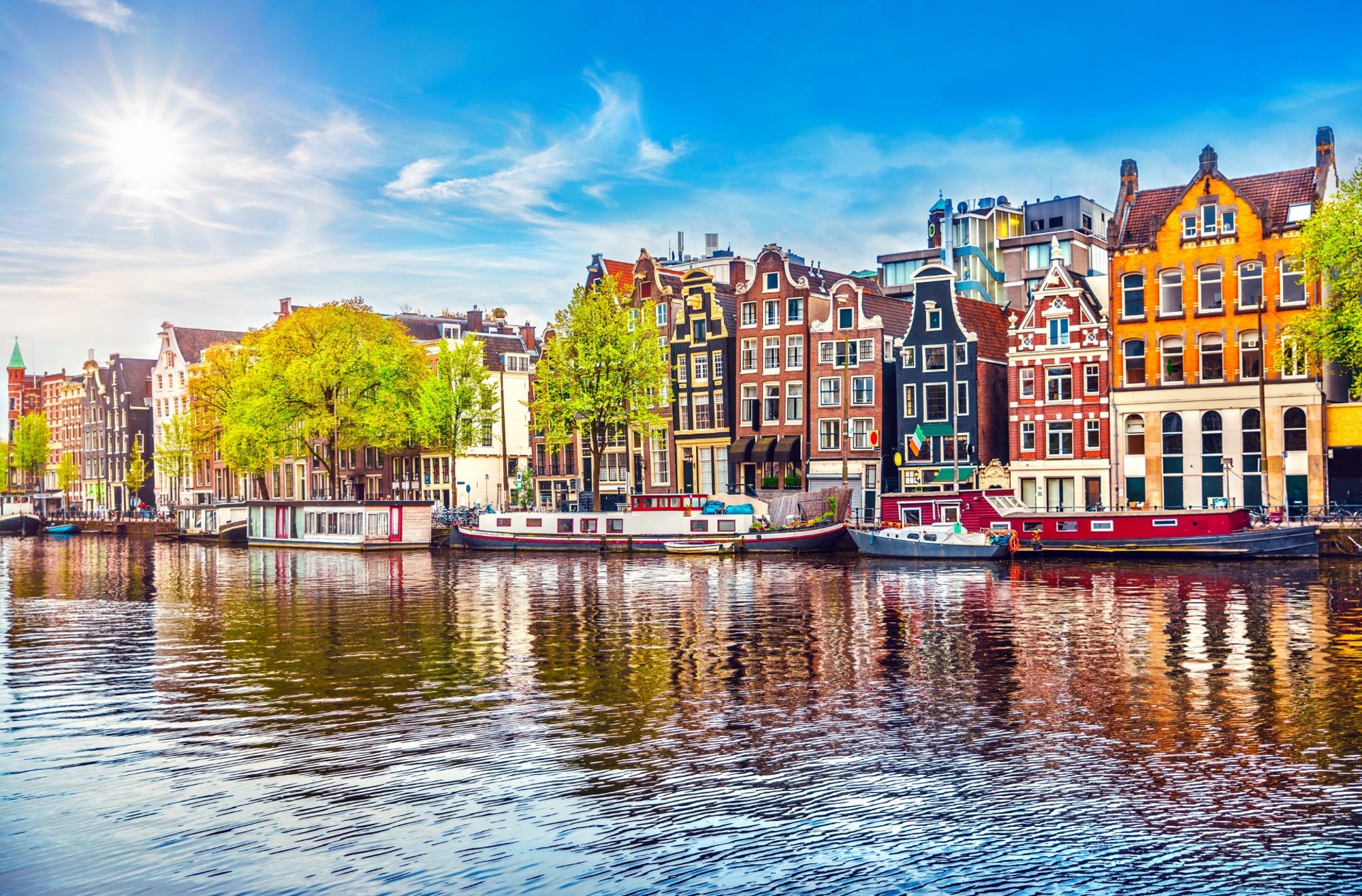
1. Amsterdam's streets tell stories at every corner. Centuries-old canal houses lean slightly forward, their narrow facades watching over boats that drift through waterways built during the 1600s. In the museums, Van Gogh's brush strokes and Rembrandt's mastery wait for visitors who step away from canal-side cafés.
Spring brings tulips and fewer raindrops between April and May. The weather warms enough for comfortable walking while gardens burst with colors. September and October offer quieter streets as summer crowds leave, while trees along canals turn golden.
Life in Amsterdam follows reliable rhythms. Vendors call out at Albert Cuyp Market as they have for over a century, selling herring, stroopwafels, and cheese. The monthly IJ-Hallen fills an old shipyard with thousands of sellers and treasure-hunters. In the evening, musicians' notes float through the perfect acoustics of the Concertgebouw, a concert hall where performers have played since 1888.
- -Fly directly to Amsterdam Schiphol Airport, one of Europe's major hubs
- -Take a high-speed train from major European cities like Paris, London, or Berlin
- -Arrive by cruise ship at the Amsterdam Passenger Terminal if traveling by sea
2. Rotterdam rebuilt itself from ashes. After bombs fell in 1940, the city chose not to recreate its past but to reimagine its future. Now, cube houses tilt at impossible angles, market halls curve overhead like massive arches, and old docklands transform into waterfront neighborhoods.
The city opens up between May and September when café tables spill onto sidewalks and boats cruise the Maas River. June days stretch long, giving extra hours to explore as the sun stays up past 10 PM.
Ships larger than skyscrapers glide through Rotterdam's port daily. Harbor tours pass container terminals where global trade moves in colorful metal boxes stacked like children's blocks. Inside the Markthal, food vendors prepare dishes from Dutch raw herring to Indonesian satay. Walking between buildings reveals how architects turned practical needs into art forms, creating shapes that would be impossible in other cities.
- How to get to Rotterdam
- -Take a direct train from Amsterdam Schiphol Airport (approximately 30 minutes)
- -Arrive at Rotterdam The Hague Airport for direct flights from European destinations
- -Travel by Eurostar and connecting train services from London and Paris
3. Eindhoven, where lightbulbs once changed the world, new ideas still spark to life. Eindhoven's old Philips factories now house design studios, technology startups, and creative workshops. Former industrial spaces with high ceilings and large windows give room for big thinking and bigger creations.
Summer and early autumn sunshine brightens Eindhoven from June through October. These months bring pleasant temperatures for biking between innovation districts and relaxing in the city's green spaces.
In Strijp-S, guides lead weekly tours through brick buildings where radios and televisions were once assembled but now host fashion designers and furniture makers. Workshops invite hands-on participation in creating something new. At High Tech Campus, researchers occasionally open their doors to show how they're developing technologies that might shape tomorrow.
- -Fly to Eindhoven Airport, which serves numerous European destinations
- -Take a direct train from Amsterdam or Rotterdam (approximately 1.5 hours from Amsterdam)
- -Drive via the A2 motorway, which connects Eindhoven to major Dutch cities
Tips for Traveling to the Netherlands
VISA & ENTRY
- EU citizens: No visa required
- Non-EU visitors: Schengen visa is often needed, apply 2-3 months ahead
- 90-day tourist limit in a 180-day period
CULTURAL ETIQUETTE
- Punctuality valued
- Direct communication appreciated
- Greet with a handshake
- Tipping: 5-10% for good service
MONEY MATTERS
- Currency: Euro (€)
- Cards widely accepted
- ATMs abundant
- Contactless payment common
HEALTH & SAFETY
- Emergency: 112
- No specific vaccines required
- Travel insurance recommended
- Safe tap water
TRANSPORTATION
- OV-chipkaart for public transit
- Extensive train network
- Bicycles everywhere – respect bike lanes
- Amsterdam: trams and metros convenient